
TSS Archive Project
University of Idaho & TSS Joint Project
Hiroshima, Japan -November 12, 2025
Presentation Events Held in Three Locations Across the United States!
“Chieko
Kiriake’s Testimony” and“A Malaysian Second-Generation Survivor’s Promise”
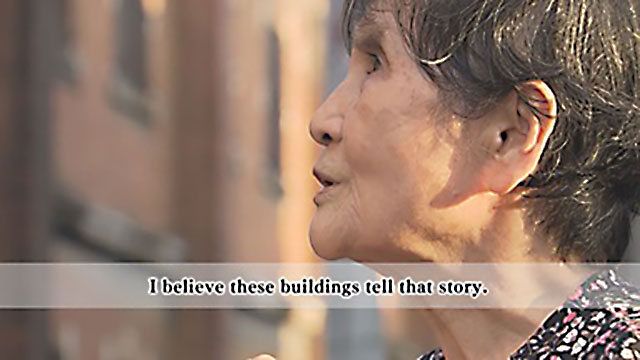
The Next Generation Succession Project is one of the initiatives under the TSS Archive Project. In this program, young people translate into English the testimonies of atomic bomb survivors collected by TSS-TV Shin-Hiroshima, a television station based in the city that experienced the bombing and share these stories with the world. Since January 2024, the University of Idaho in the United States has adopted this initiative as an official part of its Japanese language program. This year, 16 students worked on translating two feature news segments that were broadcast on TSS’s news program “TSS Like!”
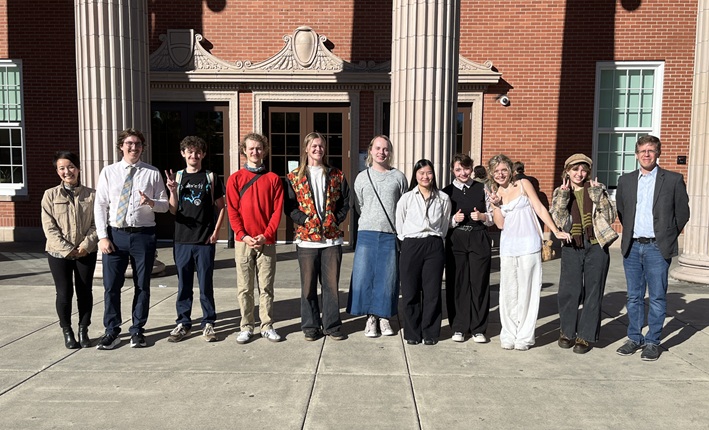
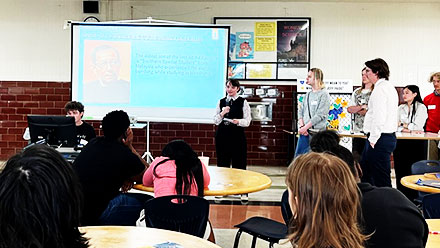
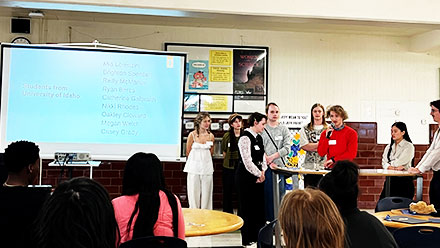
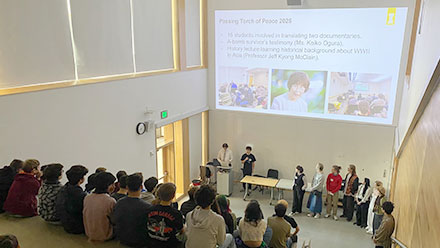
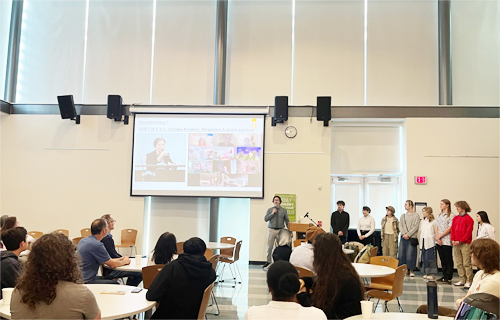
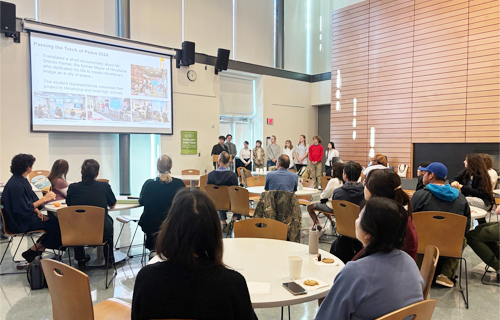
On October 6 and 7, nine of the students involved in the translation project traveled to Portland, Oregon, and Vancouver, Washington, where they presented their English translations at Grant High School, Jefferson High School, and Clark College.
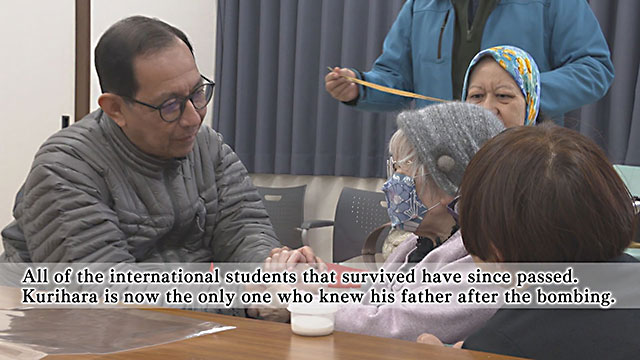
A-bomb survivor's promise with a hibakusha
At two high schools in Portland, the presentations were held during Japanese language classes, with many students participating who are learning Japanese as heritage speakers. Among them were students who had previously visited Hiroshima or had already heard testimonies from atomic bomb survivors. After the presentations, specific questions were asked, such as “How many survivors are still alive today?” and “What was the population of Hiroshima at the time of the bombing?” These moments left a strong impression of how seriously the younger generation is engaging with history.
At Clark College in Washington, the presentation was held as a public event, drawing an audience of about 35 people. The participants listened attentively to the University of Idaho students’ presentations, and many questions were exchanged.
In response to the question, “What was the most important thing you learned from this project?” one student said, “Even if we live in different places and speak different languages, the feelings of love for family and the desire for peace have no borders. We all share the same hopes. That’s something we must never forget.” When asked, “How do you want to continue this activity in the future?” another student answered, “I believe continuing to share these stories is the only thing we can do,” deeply moving the audience.
The University of Idaho students approached the stories of hibakusha Chieko Kiriake and Malaysian second-generation survivor Zulkifli Abdul Razak as something personally meaningful, and showed a sincere commitment to conveying their messages. Their heartfelt efforts resonated not only with young people but also with older members of the audience.
As Hiroshima marks 80 years since the atomic bombing, the world remains unstable and dangerous. Yet, the sight of young Americans serving as bridges between Japan and the world, passing on the light of peace across borders, offers a powerful sense of hope for the future.
University of Idaho

Founded in 1889, the University of Idaho is a public research university located in the northwestern region of the state. As the leading research institution in Idaho, it plays a significant role in supporting the local economy and employment. The university fosters diverse perspectives and innovative, creative thinking, offering over 200 undergraduate and graduate programs. In addition to its main campus in the city of Moscow, it operates campuses and research facilities throughout the state.
